

CryoFab
A Prototypical Bespoke 3D Printer
Built an integrated hardware–software platform enabling fabrication with ice as a transient material.
Research Project · Harvard MDE
Role: System Architecture · Mechanical & Thermal Design · Electronics & Wiring · Firmware & G-code Development · Fabrication
Team: Hana Khurshid, Morgan Doane, Siddhi Patil
CryoFab is a bespoke, open-source 3D ice printer developed as a research platform for exploring water as a transient fabrication material. By leveraging ice’s self-adhesion, thermal responsiveness, and ephemerality, the project challenges conventional assumptions around permanence, waste, and material efficiency in additive manufacturing.
Designed as an integrated hardware–software system, CryoFab enables controlled experimentation with parametric and organic geometries through ice deposition and casting workflows. Rather than targeting a singular application, the project frames fabrication as a site of inquiry; using ephemeral matter to investigate alternative, environmentally informed approaches to making.
This project was awarded the 'Student Ingenuity Award' at the Harvard Innovation Labs Presidential Innovation Challenge 2026.
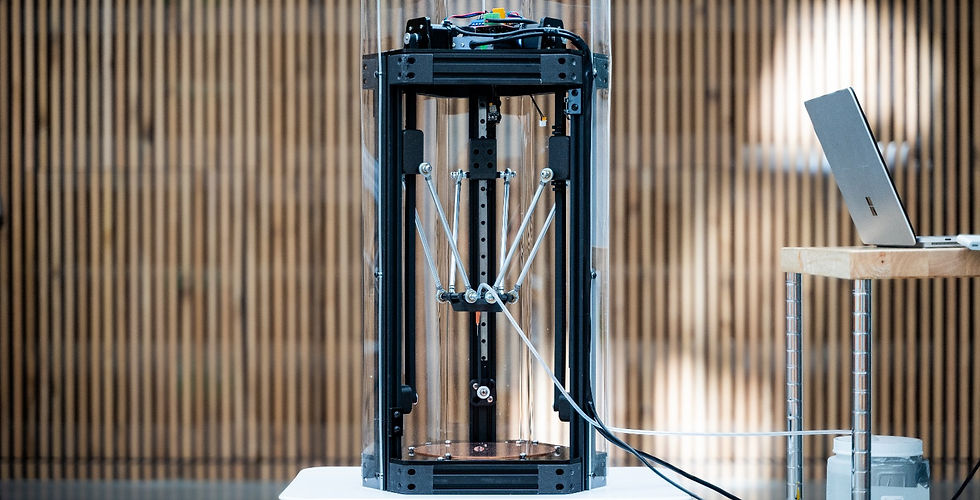
CryoFab is a bespoke research platform that treats water as an ephemeral fabrication medium. It was engineered to explore ice’s thermal, adhesive, and transient qualities within additive manufacturing systems. The work reframes fabrication as a process where material disappearance is a generative design factor, not a limitation.

Render of Custom Delta Printer

Render of End Effector
Why Ice as a Material System?
-
Ice as biodegradable, zero-waste material
-
Phase change behavior as constructive property
-
Self-adhesion and form emergence
-
Adjusts fabrication logics beyond plastics/metals

Clip of Print Tests

System Architecture & Integration
The CryoFab platform integrates motion control, custom extrusion hardware, cooling systems, and a G-code–driven control architecture to deposit and freeze water in a controlled sequence.

Main Components of Printer - Exploded View


Thermal Control as a Design Parameter
Ice fabrication requires precise thermal control to enable bonding, stability, and controlled phase change. CryoFab integrates a custom cooling bed driven by Peltier modules to locally regulate freezing behavior during deposition. Rather than treating cooling as a constraint, the system leverages thermal gradients as an active design parameter, enabling localized surface temperatures down to −45 °C.
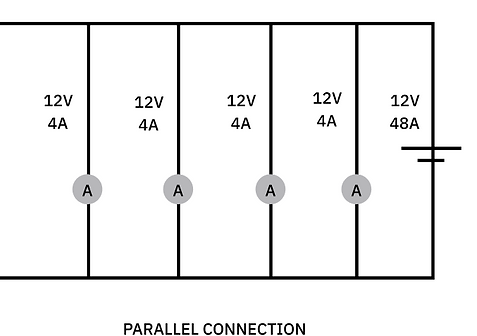
Peltier Cooling Bed
Peltier Cooled to 45C through Parallel Connection
Motion Control as a Design Parameter
CryoFab’s fabrication logic is governed by a modified Delta firmware environment, enabling precise spatial control of ice deposition through G-code–driven motion paths. Rather than treating firmware as an implementation detail, the system leverages programmable kinematics and timing to coordinate motion with thermal conditions.
This integration allows deposition speed, path geometry, and dwell time to directly influence ice bonding, layer adhesion, and emergent form, making control logic an active participant in material behavior.


RAMPS 1.4 Assembly

Configurating marlin Software
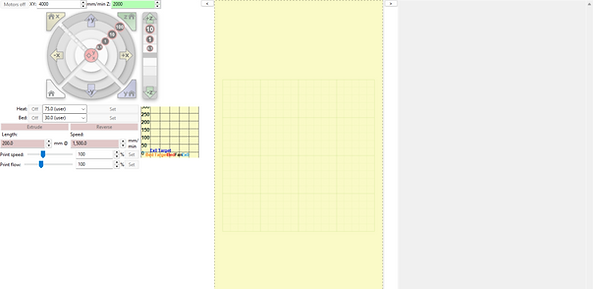

G-Code Generator
Pronterface for inputting G-Code
Experimental Fabrication Workflow
CryoFab enables iterative, process-driven exploration: from water preparation to controlled freezing and emergent form development.
The Delta marlin software was updated and G-Codes made according to the printers parameters.

Configurating Print Settings

Configurating Print Settings
Observations from Material Experiments
Rather than optimize for a single outcome, our work records how ice behaves under varied process parameters, suggesting new design grammars for ephemeral fabrication.

Test Prints
Provocations for Design & Material Systems
CryoFab challenges conventional assumptions of fabrication by placing ephemerality at the center of material strategy. The project raises questions about permanence, waste, and how design might engage with transient matter, suggesting new strategies for sustainable making across domains.